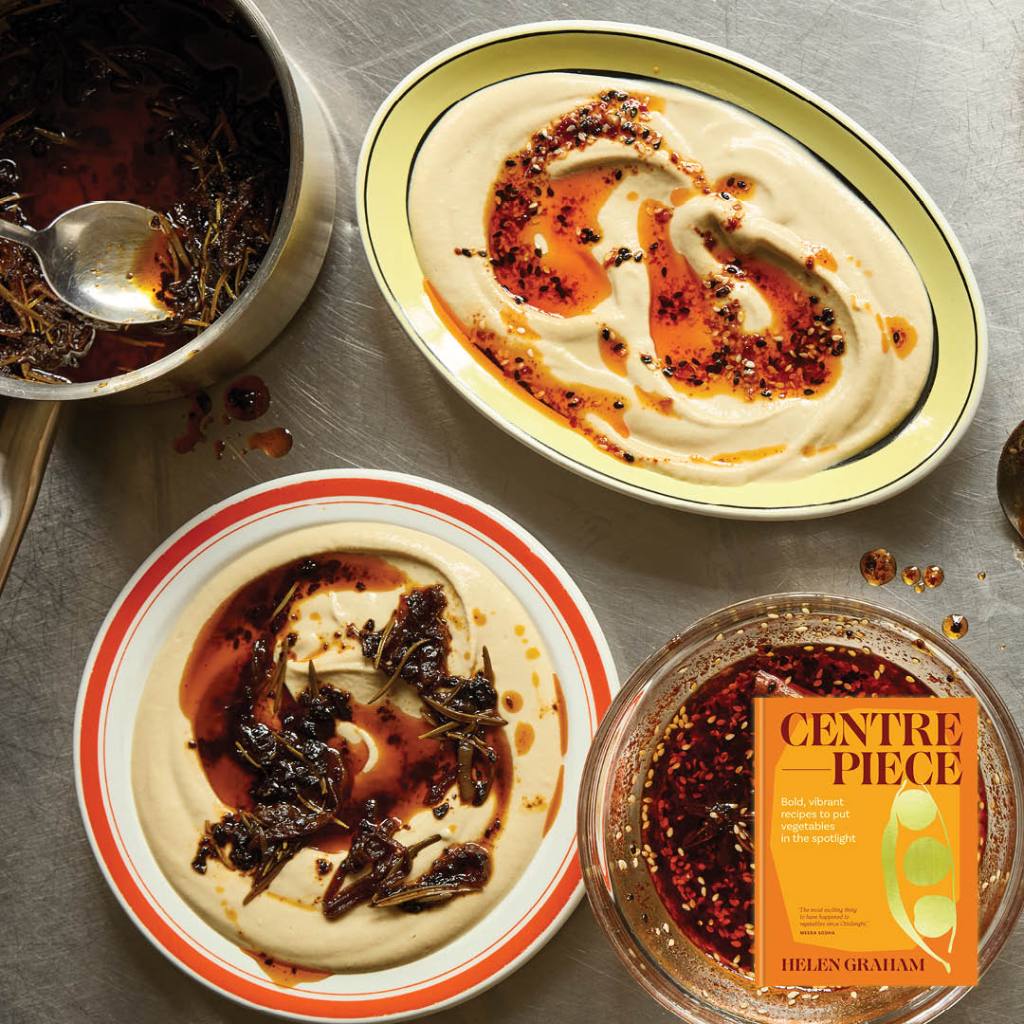
Hummus (VG) from Centrepiece
“This is not a recipe but a guide. Recipes can be scary. They can be limiting. Cookbooks were not always as precise as they are now; precision is a new thing. I am sure there is direct correlation between people saying they don’t know how to cook and recipes becoming more exacting. So, here I present just a rough blueprint for making hummus.” Helen Graham, author of Centrepiece

Serves 6-8
150g (5½oz) dried chickpeas
½ teaspoon bicarbonate of soda
2 garlic cloves, roughly chopped
1½ teaspoons ground cumin
2 teaspoons fine sea salt
70ml (21/3fl oz) lemon juice
160g (5¾oz) tahini, plus more if needed
The night before you want to make your hummus, put the chickpeas in a large container or bowl and cover liberally with cold water. There should be a lot of water, and there should also be a lot of room for the chickpeas to double or triple in size. Soak for at least 8 hours. Don’t skip this. Yes, they will cook if you boil them from unsoaked, but they will never be soft in the same way as pre-soaked chickpeas are.
Drain the chickpeas, transfer to a large saucepan and cover with at least 5cm (2 inches) of fresh cold water, plus the bicarbonate of soda. Set the saucepan over a medium–high heat. You can salt the water here if you like. It doesn’t affect the chickpeas’ softness, but it does inhibit your control over how salty the hummus will be, so I salt only when blending at the end. Stir and bring to the boil, then reduce the heat to a gentle simmer.
While the chickpeas are boiling, a scum will form on the surface of the water, which is all their impurities. Skim this off with a ladle or a slotted spoon and cookfor 45 minutes or so before checking to see how soft the chickpeas are by running a few under cold water, then seeing if you can squish them between your fingers. If they squish easily and with little resistance, they’re done, but you do need to keep cooking them until they’re this soft. The time is just a guide here, as it’s taken me anything from 45 minutes to 3 hours in the past (though they’re generally cooked after 1½ hours).
As you are cooking the chickpeas, from maybe the 40-minute mark, you can go into the saucepan with a slotted spoon, disrupt the chickpeas and pull out any floating skins. The more skins you collect, the smoother the hummus will be, and it’s definitely easier to do this once they have cooked for some time. Once they are fully cooked, before draining, you can turn off the heat and continue pulling out skins until you’ve got as many as you can get, or can be bothered to. (If you have a very powerful blender, this process won’t matter so much, but if not, it’s definitely a good idea.)
Place a colander over a bowl and drain your chickpeas, reserving their stock and then allowing both stock and chickpeas to cool separately; I’d leave them for at least 30 minutes. The reason I like to cool the chickpeas before making hummus is that, when they’re hot, they absorb much more liquid, meaning you end up with a much stiffer hummus than you’d want. How the texture is when you make it from cooled chickpeas is how the texture will stay.
To blend the hummus, you want the most powerful blender you have. My blender of choice is a highpowered bullet blender, but in lieu of that, you want the type you’d use to make a smoothie. Put the chickpeas into that blender with 300ml (1/2 pint) of the cooking liquid, the garlic, cumin and salt. The cooking liquid will be a dark brown and a little viscous, but still pourable. If there was too little water in the pot when the chickpeas were cooking, it will have a viscous jelly-like texture, so if this is the case, just whisk in a little cold water to loosen it. Blend until the mix resembles a really thick but completely smooth smoothie. To achieve this, you may have to blend it for a good few minutes. If it’s feeling a little stiff, add some more cooking stock.
Decant into a bowl and whisk in the lemon juice and tahini. If you want it thicker, add more tahini, and if you want it looser, add more stock.
How to serve Hummus is pretty perfect just the way it is and you can serve it with plenty of good olive oil (mandatory), za’atar or hot paprika, or even sumac. On pages 40–1 of Centrepiece, you will find three flavoured oils that I like to pour over my hummus when I am serving it for a group and want to make it extra-special.